
Carbs break down into sugars which may cause diabetes
L: Well okay, so one of the first things that happened to me was I started to have blood sugar regulation problems and it is utterly predictable that when you are eating a diet that is nothing but carbohydrate our bodies were not designed through evolution to consist on only sugar. It's very damaging so what happens is you eat a load of carbohydrate and you can call it complex carb if it makes you feel better but at the end of the day it is a load of sugar. All of that complex carbohydrate is broken down into simple sugars in your digestive tract. That is what your digestion does - it breaks everything down into tiny little pieces and with sugar that's what happens. It's just broken down into simple sugars and then it's absorbed into your bloodstream. So four, five, six times a day every time you eat as a vegan you're spiking that blood sugar so there's this flood of gar into your body and that's a biological emergency. Our brains can only function within a very narrow range of blood sugar. If it's too high or too low you can fall into a coma and die. It's not a joke. It's very real and your body responds to that emergency. Listen to "Veganism Creates More Problems Than Helps – Interview With Lierre Keith" on Spreaker. So the first thing that happens is your pancreas will release a flood of insulin and that's an emergency response that's not supposed to happen three or four or five times a day. Insulin job is immediately to grab everything that it can out of your bloodstream and shove it into the cells for storage just so that your brain isn't thrown into a coma. So that means everything that you ate is now you know being grabbed onto by insulin and shoved away where you can't reach it just to save your life essentially. And that's fine if it happens a few times a year. I mean as hunter-gatherers there would have been moments when we had a lot of berries or some fruit seasonally or perhaps somebody discovered a beehive and there was some honey. That would have happened every once in a while. Once in a while you can handle it. You can't handle it three, four or five times a day. So insulin does that but it's a very blunt instrument so it takes out too much because it's grabbing everything as fast as it can. So if your blood sugar levels are too high insulin takes it all away. Now your blood sugar crashes and it's too low; so now you have that desperate feeling "I have to eat or I'm gonna fall over". Like "I'm gonna die if I don't put food in my mouth" and that's true. You feel that way because your blood sugar is now too low and you can fall into a coma and die. You have to get your blood sugar back up and that started to happen to me almost right away, like within a few months of being a vegan. I was already starting to experience those swings. I had no idea what it meant. I had never really experienced anything like it and I didn't have a name for it. It just became normal that every few hours I had to eat again.Diabetes problem
S: That's why so many vegans make videos only about food. All their life starts revolving around food. They have to snack in between meals, they snack on fruit. So you're saying that even if they don't consume white sugar, if they just eat berries and other kinds of fruit it's still unhealthy for them? L: At the end of the day it's still just sugar. I was so pure [as a vegan]. I never ate white flour. I never ate white sugar. I never ate white rice. It was like I was trying so hard to be a good vegan who was gonna do it well. I knew white sugar was bad but what I didn't realize was that everything I was eating was sugar. It just was a little bit more complicated and again my body was gonna break it down into simple sugars. I didn't know that. Nobody told me that. I thought I was eating the right stuff. It was brown rice, legumes, whole wheat flour and then fruit. But it's exactly that and so every few hours you have to put more food in your mouth because you're on that roller coaster. And then, of course, you're wearing out your insulin receptors so every time you do that you're wearing out the entire system. So the insulin is sort of like the key and the receptor is like a lock so they have to fit together. All your hormones are like that and insulin is a hormone. But as you're doing this three, four or five times; six, seven, eight times a day, every time insulin has to fit into a cell you're wearing it down a little bit. So it's like a really old locking key. Eventually it's gonna stop working. S: Then what happens when it stops working? L: Then you're diabetic. That's the end of it. Then no matter how much insulin you make, you're never gonna make enough because it can't get into the cells anymore. It can't lock on anymore and then you now shift all that sugar into the cells for storage. The lock is leaky so it won't work anymore. So now you have to keep producing more insulin every time. And eventually your pancreas just gives out. It just can't make insulin anymore. First you have type 2 diabetes where you can't make enough insulin so your blood sugar is constantly way too high. So now you have to start injecting it or taking it orally. Eventually your pancreas will give out entirely and then you're gonna be on those drugs forever because you have no way to produce it anymore. So now you're a type 1 diabetic as well as being a type 2 diabetic. That happened to my mother so I watched this whole process in my mother for the last 20 years of her life and it was horrible. It would have been so easy... Like just eat a low-carb diet and she wouldn't do it. So she just you know drove it into the ground and eventually died. S: I usually stay in India and people there consume large amounts of carbs especially in the form of white rice and their desserts are so sweet. Most of the elderly and even many middle-aged people have diabetes. L: Yeah, you can see it in their body types as well. I mean insulin is called the fat storage hormone because if you have too much insulin in your bloodstream you can't stop because all this stuff goes into your bloodstream. It is shuttled into the cells for storage and then you can't get it back out if the insulin levels are high. It doesn't go the other way so you can't access any of that energy, any of those nutrients, and what happens is people keep gaining weight and they're exhausted. It's not because they're lazy. It's because they literally cannot access the energy in their cells; like their bodies can't bring it back out and actually burn it because the insulin levels are too high so when you look at people from countries like America or India where people are eating these high-carb diets, that's what you see. I'm not trying to say anything bad about fat people. This is not a political statement. It's just a statement of physical fact. You keep getting bigger, but you can't access that food. You can't use it. You're exhausted. You're tired and you're just gonna keep packing on the pounds as long as those insulin levels are high. And that's exactly what you're seeing in India and what you see here all the time now in the United States. It's just getting worse and worse.Dangers of reduced hormone production
S: I saw some vegans who actually are gaining weight but there are many vegans that look malnourished. Why do you think that happens? L: Yes, so then you have the other problem too. So I would say what I've observed mostly is that the women tend to gain weight and the men tend to get really skinny and there's some crossover there where also some of the men will get really heavy and some of the women look emaciated. But it's about 80% I would say by sex, and that's just what estrogen does with women and what testosterone does with men. S: You made me remember about hormones. That the body kind of stops body producing hormones when people stay vegan for some time, and then I noticed that men start looking more feminine whilst women start looking more masculine. That's what I've noticed. L: You're noticing a real thing. So there are two things going on. There's an explanation for all of this - you're not crazy - that is what you're seeing. So the first problem is that all of your hormones, including your sex hormones, are made from cholesterol. Cholesterol has been vilified as the root of all evil. It's actually the root of life. It is an absolutely life-producing, life-affirming substance. Every last one of your cells needs cholesterol for basic stability. Your brain is mostly made from cholesterol. We need cholesterol. You will die without it. One thing that cholesterol does is it's the mother hormone. It's the base substance from which all of our other hormones are made. So if you don't have any cholesterol in your diet, your body will slowly stop producing hormones. So that's what happens. Another thing that happened to me about a year and a half into being a vegan was my menstrual cycle stopped completely and for twenty years I never had a regular period. It's very common among vegans and among any women who are eating very low-fat diets. A lot of athletes have this problem. The puberty of the little gymnasts is put off for years because of this. So it's very damaging. And because you don't have enough hormones, what your body does is say "Okay, well, you don't need to reproduce right now. So we're gonna stop producing sex hormones and what tiny little bits of cholesterol we do have we're gonna try our best to make the hormones that you need just to stay alive". It absolutely will do that, and there are many fallback systems like this about every biological process, because life wants to live and it figured out a long time ago what to do in such emergencies. This is one of those situations or it's like you don't have to reproduce tomorrow to survive. You can't reproduce next year or the year after. So let's not worry about sex for now; let's just keep you alive day to day and hopefully there's better food in a month or two. And when things are better in the environment and you have enough to bear a child, we'll give you some sex hormones back, and then you can get pregnant if you feel like it. So that's what your body does. It shuttles that off till later to keep you alive now. We don't need to have children every single day but we need to breathe, eat and do similar things right away. but you don't need to reproduce all the time, so your body makes that kind of trade. So that's one thing that's happening. And that is very commonly noted just anecdotally and also in the medical literature. We understand why it's not a mystery so that's number one. Number two when you have those is that produced the high insulin levels insulin triggers a whole bunch of really destructive sort of a cascade of bad effects throughout the body including inflammation including damage to the blood vessels like all this stuff but one of the other things that it does in women it triggers an enzyme that converts estrogen to testosterone and in men it triggers an enzyme that converts testosterone to estrogen. That condition is here called PCOS which is polycystic ovary syndrome and all of their estrogen is being converted slowly to testosterone so they end up with having more masculine body. So they'll get a lot of facial hair, their voices can deepen, and they sometimes get acne. They have a terrible time getting pregnant and it's because they don't have enough estrogen and they've got way too much testosterone for a normal female.Vegan voice change over years; feminine vegan men and masculine vegan women
S: I watched a video where it was shown how a vegan YouTuber's voice changed over the years of him being vegan [it became coarse but female-like]. L: That video is correct. They are observing a real phenomenon and we know why this happens. It's not a mystery, and then the opposite happens to men where now they've got too much estrogen and it's not good for us to have our hormones out of whack. The effects are throughout the body but you know in particular with men, they're gonna have not enough muscle. So they're gonna look more feminized. They've got that muscle wasted look underneath it all. There's plenty of skinny men who still have like sort of good male development, but this is a totally different look. And you know what I'm talking about - they look muscle wasted and they're gonna have all kinds of sexual health problems. They won't be able to have normal sex life because they don't have enough testosterone.Wrong self-image
S: I think that most of them have wrong view about the way that they look. I've noticed they have wrong self-image. They kind of convince themselves that they look very healthy and other vegans affirm that. But actually they don't look healthy at all. L: Yeah, it's like anorexia. It's like any of those kind of delusional states that people get with their self-image and their body image. And it's really sad. I mean... you can see the photographs they put up. I've seen ones that were people who were breatharians where they think they can live on air which is like a whole different level of insanity. And the ones who persist in that... they'll put up photographs of themselves six months into being a breatharian and they look like they're out of a concentration camp. It's terrifying. Their parents and families must be horrified. They just look like skeletons and they're putting up these photos doing yoga poses or whatever, and they think they look really good. It's like somebody with anorexia where you don't see your correct body image. This is just not reality and it's terrifying when you get into that mindset.Larger issue behind factory farms
S: You mentioned that one of the reasons why you got into veganism was because you felt bad for the animals being tortured. I think vegans really think that they are helping animals but then I'm thinking, okay, so if farmers don't get profits from animals, they would not keep them. Then what would happen to those domesticated animals? Where would they go? How would that work? L: Yeah, that's number one. There's a larger issue here because that is absolutely one of the things that inspired me to be a vegan. I saw the horrible pictures of the factory farms. Very clearly these animals were in there being tortured. It's terrible what happens and I do think that across the board this is something that everybody can agree. No sentient beings should be subjected to that. We really should be able to build like a political consensus from every angle that this is wrong and that would be great if we could get rid of factory farming. So we all agree to that. Put that aside, that's not what we're talking about. We're talking about something actually larger what is going on. So as a vegan what I ate was almost entirely agricultural foods so it was monocrop annual annual crops, so wheat, rice, soy and I did not understand where those things came from. I just assumed, well, they're plants so it has to be nonviolent and somehow morally ethically good. And I didn't know anything better, you know, like I grew up in a very kind of urban environment. I didn't know where my food came from. I had no idea what the cost to the planet was for me to eat something like rice. I just didn't know, and it took me a long time to get the information and then let it accumulate into some kind of knowledge that took me 20 years and it was a huge struggle for me because everything that I found out really contradicted what I wanted to be true as a vegan. So it was a big struggle but at the end of the day this is the truth. This is agriculture:- You take a piece of land;
- You clear every living thing off it and I mean down to the bacteria.
- You plant it for humans only so excuse all those plants and animals that are supposed to live there - they have nowhere to go. All of them are just wiped out. So it's biotic cleansing. I mean, we've all heard of ethnic cleansing where people are driven off. Well, in this case everything is driven off. It's every kind of life.
Agriculture, not animals, destroys the earth
L: Yeah, so that's the other problem with agriculture. It's that it's inherently destructive to soil. The moment you put a plough to soil you degrade that soil that it's not something that ever happens in nature. The absolute opposite happens in nature where the ground is always covered and there's deeply rooted perennial plants. And all of that is important - every single thing that I just said makes more soil happen and agriculture is the exact opposite. When the land is constantly cleared it's constantly disturbed and none of the plants that you grow have deep roots that actually repair and hold soil in place. So annual crops only live for one summer. they don't have time to get really big. They only live that one time, so all of their energy has to go toward making a baby. So it's a big seed. Annual crops tend to have big seeds. That's why we eat them. That's why humans started doing that. The seeds were big enough that it was worth the energy to harvest them. Small seeds are not really worth it. Big seeds would take too much energy to harvest and make edible, so that's why it's always annuals that we eat.No perennials equals topsoil depletion
But the problem is that the root of the annuals is shallow. In nature around 95% of all plants are perennials. They live a long time so think about a tree. A tree does not grow in one season - nothing could get that big in one summer. So they live many years. Where I live in the Pacific Northwest in America, the trees here are 2,000 years old. What that means is they have a really complicated root system under the soil and that's what those roots do - a whole bunch of things but the most important is that they hold the soil in place. Physically they are the matrix that keeps it there. Number two is they provide a channel for rain to enter the soil. If there are not those physical channels for rain to get in, it just runs off, and then it destroys the soil surface. And if there's any kind of a slope to the land, it'll just run right off. And eventually it hits the nearest waterway and then clogs that river with all that silt. So that soil that needs to be on the land is now in the water. So not only have you killed the terrestrial life, you're now killing the aquatic life as well. And that's what agriculture does over and over. So that's another thing. And then the third thing that those giant roots do is they can actually get down to the bedrock of the planet. They can eat rock like you and I cannot. We can't get minerals out of rocks but roots in combination with various bacteria have the acids to do that. So they degrade the rock. They do kind of in exchange what the bacteria gives the minerals and the plant gives the sugar and they have a relationship. But regardless, the roots then can bring the minerals up to the surface of the planet and that's where the rest of us generally get our minerals one way or another. That's how that happens and without those deeply rooted perennials if you're only growing annual crops, what you're doing is called mining because you're removing those minerals every time you plant an annual crop. You've got no way to replace them. S: When you told about the necessity of the earth to be always covered, that reminded me a video I listened to of a women who was ex vegan and I believe she was from Romania. And she said that her people used to be nomads and when they immigrated to Romania and saw agriculturists, they were shocked because those people were digging the earth. But that was against their traditions. They believed that the earth belongs to the dead and you should never dig it like this. That it was disrespectful of the earth. So those nomads would eat animals and what grows from the earth, but they wouldn't till it. L: I think this is pretty widespread belief. I think most indigenous traditions whether they're from Europe or the Americas or Asia or wherever, there's definitely this understanding that the earth shouldn't be disturbed. Like the earth is doing its thing and we can never understand how complex that is. There are places we don't go, there are things we don't do. We need to be so humble and respectful of those life processes that are keeping us alive. You and I have no way to make oxygen. We've got no way to do that basic recycling of nutrients. And we can't take sunlight and turn it into our bodies as we aren't phototrophs. We aren't plants - we can't do that, so we are dependent on all of these other creatures most of whom we can't see. Most of them are absolutely microscopic. They are the ones that do that basic work of recycling the nutrients and without them we're dead. I mean... it's just over on planet earth and I think most people until very recently understood that we need to be humble in the face of how dependent we are and how lucky we are that the plants do this for us. There are so many concepts of the plants being our elders, and that's true. The plants are the ones that created the cradle of soil and the blanket of air - the atmosphere that made animals possible. So it's true on an evolutionary scale that the plants were here first. And then we were able to be here as species and we need to be thankful. Instead what we've done is we've destroyed them all. 98% of the world's old growth forests and 99% of the world's prairies are gone, and the reason that humans destroyed them was agriculture. That's literally what it is. We've taken everything that could be taken.Vegans don't understand the larger environmental issue
S: I have heard many vegans argue that actually it's not agriculture but it's keeping animals for our consumption that destroyed the earth. What can you say in response? L: Agriculture was very destructive everywhere it's ever happened. It ends up just being a desert so the very first place that's where agriculture began - you can look at the Fertile Crescent Iraq-Iran Valley, the Indus Valley, and now it's just desert there.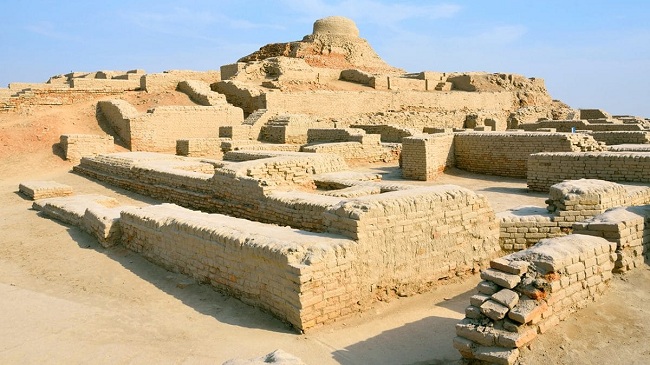
Indus valley - the land used to be very fertile here but topsoil was destroyed by agriculture
The introduction of gas nitrogen and what it did
So agriculture itself is the problem. A whole other thing starts. The world was basically out of topsoil. We've used it all. We'd skin the planet alive and at that point the scientists had figured out how to make accessible nitrogen from oil and gas and that's this thing called the Haber-Bosch process. It's a chemical process where at that point oil and gas were still pretty cheap. It's very energy intensive but you can extract the nitrogen using this chemical process and that nitrogen was originally used to build bombs for the world war. And then the war was over and you have all these factories that are kind of geared up to do this. And other scientists had long since realized that the world was running out of nitrogen. The soil was gone, and this was gonna be the solution.Hybrid grain
We're just gonna make nitrogen that plants need from oil and gas and we'll be able to keep feeding ourselves eating fossil fuel at this point. If you're eating grain, you're eating fossil fuel on a stalk. That's what makes it possible - oil and gas. So what happens in 1950 is that they start doing this - they breed the plants. that's called the Green Revolution. The plants are bred to be super short like as short as they can be so that not to waste any energy on extra stem and extra leaves - just as short as they can be with the biggest possible seed head. Now those genomes have been stretched as far as they can stretch - you could not make a plant that was shorter with a bigger seed head. The thing will just fall over. So we've reached a natural end to what can be done to breed wheat, rice and other grains. And what happened was that the world population quadrupled. So we're in the same situation now. It's just we've made it four times worse by this thing called the Green Revolution. But what happened in 1950 was because of this nitrogen and the plant breeding.How factory farming started
All of a sudden there's this huge surplus of corn [because of the Green Revolution] - there's like mountains of surplus corn coming out of the American Midwest and Canada. And it had nowhere to go. This stuff was so cheap and there was so much of the surplus that factory farming was created and the only reason it exists is because that stuff was cheap it suddenly made economic sense to keep animals in a completely bizarre environment which is horrible for them. I mean... they're living on cement floors and steel buildings being fed a very unnatural substance they're not designed to eat. Corn all day in fact kill them, but economically it works because the same thing happens to cows that happens to humans - if you give them a diet of corn they get really fat really fast so from the point of view of capitalism it worked. It meant cheap meat really fast and they could make more money and that's really all that matters in a capitalist economy. And that's why factory farming is here. It's got nothing to do with the nature of cows, the nature of grass, the nature of the world - it's all about the Haber-Bosch process and those who actually created it. So that's what vegans get completely wrong. They don't understand the history of this and the political economy of it which is why their solutions aren't gonna work because they don't understand the nature of the problem.Vegans don't listen - they want to believe their ideology
And I really want them to understand this. I really really want them to, because it makes us look kind of foolish to be arguing things that aren't really true and that aren't gonna help and it's only because they haven't looked into it far enough to understand what's really happening; S: They don't want to listen because they really want to believe that they are right and I've heard interviews of people trying to make them understand why they are wrong and they don't listen. L: It's a problem with humans. We have a real tendency to create ideologies and then cling to them very tightly. We clearly have the capacity to be fundamentalists in our mindset and that's just as true for people who ostensibly care about the planet as people who don't. And environmentalists do it, we all do it. It's something that we have to always guard against because you end up on the wrong path. Like with the best of intentions you still end up with a solution that's not going to work, that doesn't actually help. S: Ideology can completely become your identity and some vegans have their businesses built on veganism so it's a big issue for them. They don't want to open their minds because they would lose everything. So they're kind of trapped. L: Yeah, and they do too like we've seen this cycle how many times now: where a famous person, like an actor a sports figure, decides to go vegan. They think it's the best thing for the world and then a year and a half later, or two years later they grind themselves into the ground. They're completely exhausted, they've got all these health problems. They can't do it anymore. And then they have to tell everybody "Oh it didn't work - I ate a burger and I feel dramatically better. I have to stop being a vegan". And then they get 10,000 death threats. Everybody hates them, and they have to close down other social media and not talk to anybody for six months. How many times do we need to go through this - it's an inevitable cycle. Nobody can survive on this diet. We already know where it ends. And yes, death threats are inevitable.The cause of vegan aggression
S: What's with the vegan aggression? I've noticed that some of them are so aggressive. L: Yeah, so this is actually true and part of it is fundamentalism. I understand that they think they are motivated to save the world, to save animals. But that alone doesn't explain it. The problem is the low fat diet itself. It has a tremendous effect on the human brain and it absolutely affects your capacity to keep a stable mental state. You can't do it on a low fat diet. What we know about people on low-fat diets is that they're three times more likely to have depression, anxiety, serious issues with rage; they're more likely to commit suicide. they're even more likely to be murdered, which seems so strange but that is what the studies show. And it's all about this - if you don't give your brain what it needs, it can't function the way it's supposed to. So yes, you're gonna have these emotional meltdowns and it's either gonna be you with terrible anxiety and depression, and it's gonna be punctuated with fits of rage, and you have no way to moderate it. And that's just what the brain does when it's starving. So you don't give it enough fat to function and then you also don't give it the amino acids that it needs to create your neurotransmitters. So the famous one being serotonin and we've all heard about serotonin. Well, where does serotonin come from? Ultimately from an amino acid called tryptophan and if you don't eat tryptophan you cannot make serotonin. It's the base substance from which serotonin is made. And you can really get that out of animal products. So the moment you go vegetarian or vegan, you're gonna have a hard time with things like depression. S: The brain is 60% fat so if you don't eat that then it will shrink. We know of vegan bone shrinkage. L: Yes, there is - absolutely. You're gonna destroy your joints, you're gonna destroy your bones - it's just not a diet that humans can survive on.Yes, cheap meat can make you sick, but not good meat
S: Many vegans argue that actually more people get sick from eating meat but actually I would look into what kind of meat people eat. Most people eat cheap meat and of course this can make them sick. L: Yeah, so this is part of the problem. If you're eating meat that is from a factory farm. So, for instance, a cow who is eating nothing but corn for the last two months of her life. The problem is that besides all the ethical issues what's happening to the cow, what's happening nutritionally, the first problem is that there are two different kinds of omega fatty acids. There's the omega-3s and the omega 6s. They are different oils that we need. Plants don't make omega 3s because they don't need them. So the problem is that on a vegan diet you will always have too many omega 6. It's not possible to get omega 3s on a vegan diet like - you just can't do it, so right away you're gonna have too many omega 6s. Even if you're not a vegan and you're eating sort of a standard diet, if those animals are in that situation where they're only being fed corn, it's the same issue. They're being fed corn which doesn't have any omega 3s in it - they only have omega 6s and within three days of being on a corn only kind of diet the meat and the milk from those animals omega 3s completely disappear and the omega 6s rise to really unhealthy levels both for the cow and for us. So even if you're eating meat, that's gonna be an issue. Like if the cows aren't fed correctly you're not being fed correctly and then the other thing is that corn itself doesn't really have any tryptophan in it. It's really low so again even if you're eating meat, if it's from one of those situations, there's no tryptophan on that meat, there should be plenty of it, and there's none. It's because they're being fed corn.What to do if you can't afford buying organic meat
S: Do you have any advice for people who can't afford buying organic meat? L: It's hard... I mean, I know that the food can be expensive and if you want to eat the right food it's definitely an issue. I don't have a great solution. Personally I only eat grass-fed beef. I don't eat any other kind but I make that a priority in my budget but I know that that doesn't work for everyone so all you can do is your best. Your best effort really is to find that available in your local stores but the cheapest way honestly is to find a farmer somewhere near you who is raising everything on grass, who's doing it well. They've got everybody out on pasture. You can go visit them. You can talk to them, ask them questions. You can meet the animals. You can look at the situation. Is the land is covered with grass? Does it look healthy? Is everybody out wandering around, having a full life? All that's important and if they're doing it well then they're restoring all that habitat and they're also sequestering carbon probably at a pretty extraordinary rate. It really is our only hope but you can meet the farmers, see how they're doing, and then you can buy directly from them - it's usually cheaper. And if you buy whole it's even cheaper, so even if you're alone, you can buy a whole cow with a group of other people, like three or four of your friends. I have a freezer that's kind of what I do. But I own a house so I can have a freezer. It's harder in an apartment. I have had freezers in apartments, though, because it's how I live. But I know that all of this it's a lot of kind of adjusting of your personal life. S: You have to prioritize. Your health is what matters most. So I think most people don't prioritize. They think they will be healthy forever. It so much depends on the kind of food that you eat. I also I live on my own land and my neighbors have goats and chickens. So I buy from them and I pay for everything sometimes even less than for non-organic store-bought things. L: Yeah, it's really great. S: I hope that talks as such would encourage people to have their own farms. L: This has always been my dream to have even just a little mini farm and it's been really great having chickens and ducks and goats, and all of that. It's so much fun. They're just wonderful. And it's really good to participate in the whole thing and feel like you know that it's being done well. I guess it's not for everybody but I think a lot of us do have those longings to be more with the land, to be around trees and grass and animals. It's like just part of our nature. We are part of the nature community. S: Yes, people who live in cities are usually very detached from how nature works and that's why ideologies like veganism are born. Because they just don't know how things work in nature. L: I completely agree and I always say here in the United States that I think one reason that these ideologies take hold is because none of us are from places like Iowa or Nebraska. They don't see what it's like in the middle of the country where all that grain comes from. If you had to drive through the miles and miles and miles of corn and see what that's done to the land and see how there's no animals, like there's nothing there but corn, and the level of devastation to that soil and to all the local waterways... it's just horrifying.Just because vegans don't eat meat doesn't mean they don't contribute to animal killing
And none of us see it. It's not our reality. We live in cities on one coast or the other of the continent. We don't have a clue what life is like, where this food comes from and we somehow think that "Well that must be the good food. It's righteous, it's not violent, there are no dead animals involved". And that's all we know. We don't realize how many dead animals are in that food. We're not counting the bison. We're not counting the prairie dogs. We're not counting the wolves in any of it. It's just "Oh well, this particular pile of food didn't have a face therefore it must be non-violent". We couldn't be more wrong. The entire ecosystems have been devastated permanently for that food.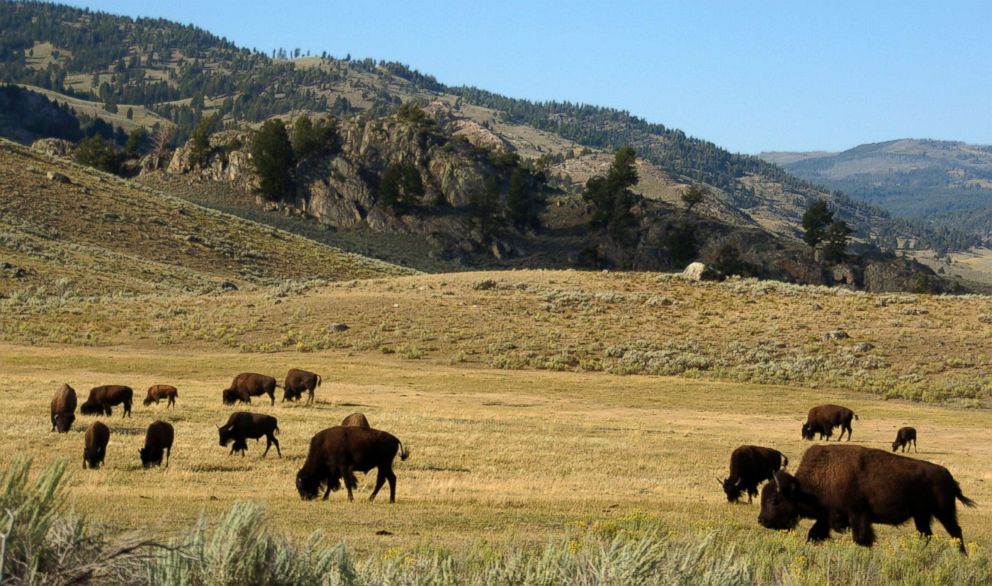
Vegans claim that animal grazing is responsible for most climate problems. Well.. With a population in excess of 60 million in the late 18th century, the species was down to 541 animals by 1889. That time with 60 million bisons did not cause any climate change:)
Thanks for this interview Simona. Lots of great information. I’ve already ordered Lierre’s book
You’re welcome, Adriana.
What a great interview!!! How informative, and sad and scary but also hopeful!!! I too, moved to live in nature, left NYC to go off the grid, in a tropical forest. I have solar power and grow some of my own food. It really touched my heart when you mentioned how hard it is to even eat ANY of the foods you worked so hard to grow!!! I am growing indigenous fruit trees, but as the area becomes more and more encroached on by human development, the animals need to find food more and more, but also there is a lot of natural jungle still thriving here, so there are also plenty of animals to eat the fruits of my garden!! I recently gave up veganism and went back to eating meat and dairy and my hair, nails and joins all feel so much improved!!! Thank you for sharing this important information. ♂️
Thank you too for sharing, Jennifer.